
The use of solar energy has become more popular in Australia over the past decade. With rising electricity bills, heightened consciousness about climate change issues, as well as attractive schemes offered by the Australian Government, the number of Australians turning towards solar energy has never been higher. Yet with the rising popularity of solar energy comes confusion.
However, much misinformation is still out there, and it can be difficult at times for home and business owners to distinguish myth from truth. The common solar energy myths Australian home owners have heard may lead to holding off decisions, increased fear, and even poor choice selection.
Within this comprehensive review, we will debunk the most popular myths involving solar panels, introduce you to the truth of solar energy in Australia, and share valuable information to ensure an informed decision is made prior to investing in the system.
The Real Facts VS Solar Energy Myths Australia
It is one of the sunniest countries worldwide but often one of the most misinformed about solar power. The fact of the matter is that advances in solar technology mean that many myths are no longer applicable.
Knowing the facts vs. myths about solar energy can prove to be very useful because solar energy is a long-term investment. A solar power system can function for 25-30 years with very less maintenance.
We will look at the most common solar power myths affecting Australian homeowners.
Myth 1:A Solar Power System Needs Direct Sunlight To Function
Solar energy relies on the sun
Among the most common myths debunked concerning solar panels is that they require intense direct sunlight to function properly.
The Truth
First of all, photovoltaics work using light, not heat. Your solar panels work because of sunlight, not heat from the sun. This means that they also work when the sun isn’t shining bright in the sky but when clouds are overshadowing the sun with light, although at a low intensity.
In Australia:
- Maximum production is generally between 10am and 4pm in summer
- During winter, generation tends to peak from 11a.m. to 2 p.m
Orientation of panels is also important. Panels that face north always produce maximum electricity. Panels that face the east and west produce electricity during morning and afternoon periods respectively.
The storage batteries enhance reliability as they provide excess electricity for use once the sun has set.
Myth 2: Solar Panels Are Too Expensive for Most Australians
Whether you are an individual consumer
Cost worries are some of the predominant myths about solar energy that households in Australia face.
“The Truth”
Never before have solar power systems been so accessible. This is because Australians are able to access Small-scale Technology Certificates through the Small-scale Renewable Energy Scheme (SRES), which greatly assists by reducing the cost associated with purchasing these systems.
Further factors contributing towards making solar energy affordable include:
- technological advancements
- Increased market competition
- Solar finance options | Flexible solar finance options
In most instances, a solar system is self-financing after 3-5 years, after which a residence can reap the benefits of electricity saving.
Indeed, this scenario completely contradicts the long-held solar power myths that Australian consumers have long believed.
Misconception 3: Solar Panels Need Regular Maintenance
Another misconception about solar panels is that they are very costly when it comes to maintenance.
The Truth
Current solar systems require very little maintenance.
Panels are mounted with a minimum angle (typically 10°+). This facilitates the self-cleaning action of rain, which removes any dirt and debris. Typically, a cleaning operation will be required only once or twice a year.
Routine care comprises:
- Removing leaves or bird nests from panels
- Unobstructed operation of the inverter
- Occasional professional inspections
Compared with other systems in the house, maintenance for solar is minimal—that ranks high among the most easily dispensed solar panel myths.
Myth 4: Installing Solar Allows You to Go Off-Grid Right Away
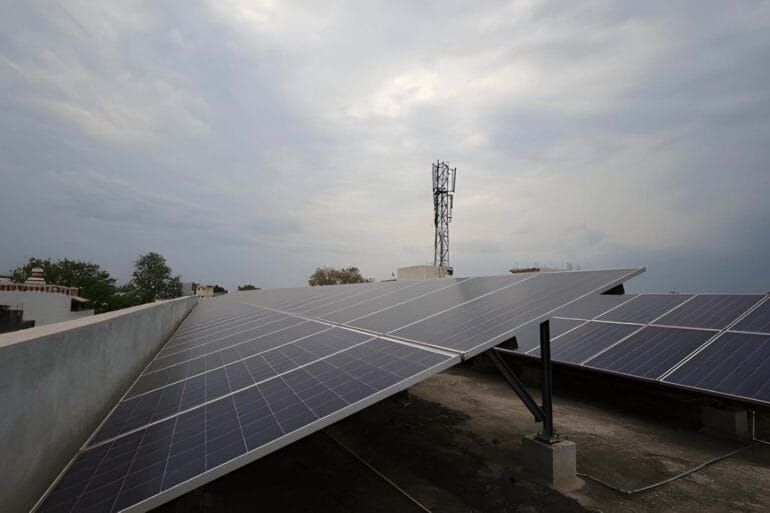
“A lot of Australians would love to totally eliminate their electricity bills by going off the grid,” reports Sanders-J
The Truth
- Connecting a solar system alone will not make your house completely off-grid.
- An off-grid system comprises the following components
- A large solar system
- Battery storage
- System Design to Accommodate Their Everyday and Seasonal Energy Requirements
Most residential houses are connected to the grid and use solar power in a way that decreases their reliance on electricity suppliers but retains grid backup availability.
This awareness is vital in distinguishing solar energy facts from myths.
Myth #5: Solar Panels Will Damage Your Roof
Solar panel installation eliminates the
Damage to the roof is a factor that has prevented many people from pursuing a solar option.
The Truth
The risk of damage can be avoided in professional installations. This is because the installer evaluates the roofing material/structure in order to select a mounting system accordingly
For tile roofs:
- Spares tiles may be required
- Tiles that were broken would be replaced when installing them
- Flashings prevent roofs from having leaks.
Any unlikely damage would normally be covered under warranties of installation—making it the next mythical aspect of solar energy Australia.
Myth 6:Solar Panels Have a Short Life
There are some who claim that solar panels have a shorter life span and tend to be replaced sooner.
The Truth
Usually, the panels that are installed in Australia come equipped with:
- Performance warranties of 25 years
- Guarantees of about 80% efficiency for 25 years
- Product Warranties from 10-25 Years
Contemporary panels are designed to work in the Australian environment; thus, the realities regarding solar energy in Australia are much more comforting than the speculations.
Misconception #7: Installing Solar Panels Damages Property Values
Older panel designs raised concerns about aesthetics.
The Truth
- Contemporary monocrystal solar panels are designed in a sleek black frame that is less noticeable. Most roofers try to keep the solar panels out of sight when facing the street.
- In fact, numerous research studies show that solar can actually enhance the value of a property because of the appeal of lower energy costs and sustainability associated with it.
- The above statement completely refutes one of the most widespread myths about solar panels.
Myth #8: More Pollution is Caused by Producing Solar Cells than the Cells Will Ever Save
Some people claim that solar energy does more harm than good to the environment.
“The Truth”
- Even as it consumes energy, solar cells produce much more clean power than is required for their production.
- This is partly demonstrated in Australia’s STC scheme in that:
- 1 STC = 1 MWh of RE
- Emissions must be balanced by systems over a specified deeming period
- Solar energy is one of the cleanest and best energy sources available in modern times.
Why Understanding Solar Myths Matters Before Installing
In today’s world of
Holding these solar power misconceptions in Australia can result in the following:
- Overspending
- Inadequate system sizing
- Missed savings
- Unrealistic Expectations
Through understanding solar energy facts and myths, Australians can now make smart investments in solar energy solutions that will address their actual needs and goals.
The Truth About Solar Power in Australia Today
Solar power in Australia has come a long way from being a niche or a lab-based project concept. Today, it stands among the most reliable, economical, and clean methods of electricity production for residential as well as industrial usage. By learning about the truth behind it, people can get rid of their misconceptions and make well-informed decisions.
But one of the most essential things that one needs to learn about solar energy in Australia is its ability to function effectively in cloudy and cooler climatic regions. It is actually an incorrect perception that solar needs heat and sun rays to work properly. Solar actually requires daylight, not heat. Thus, even on cloudy days, it continues to produce electricity, albeit with slightly reduced capacity. Sometimes, cooler climatic conditions can even help enhance the efficiency of solar panels, thereby preventing them from getting overheated.
Another important reality is that solar prices have never been lower. Over the last ten years, solar technology cost has declined substantially because of improvements in manufacturing technology. Moreover, assistance from Small-scale Technology Certificates (STCs) offsets the cost of installment for domestic consumers. This has led to solar becoming available for most people in Australia, and most installations repay themselves in a very short period through savings from electricity consumed.
Maintenance
Tenants may find that the maintenance of solar energy systems is very minimal. This is because the current technology of such panels has been made to withstand environmental conditions. It should be noted that the panels are set at an angle that allows water to clear dust that may accumulate. With this in mind, it may be said that even this particular system requires very little maintenance.
Another major benefit is that solar systems have a lifespan of several decades. This is because most of these panels have a performance guarantee of more than 25 years. This ensures that these panels operate at their peak efficiency to produce more electricity over an extended period of time. Even after many decades of service, most panels are still at an efficiency of 80%.
Solar panel systems increase home value too. Solar panel houses are very attractive in the market due to the reduced energy costs that come with them. Solar panel houses are very appealing in a market where energy prices continue rising.
Lastly, the advantages to the environment in solar energy are considerable. Solar energy generates clean and renewable power as its byproduct and helps to drastically cut down the emission of greenhouse gases in the environment.
Solar energy has a remarkably longer cycle life than other forms of energy and requires lesser amounts of materials to be used in its production and installation.
There are no adverse effects of solar energy production in the environment.
Solar energy helps to preserve a positive environment and conserve scarce resources in a
However, presently, solar power in the Australian context is no longer an experimental type of energy. Solar power is now proven, reliable, and accessible, providing economic, environmental, and lifestyle advantages
.
Conclusion: Making the Right Solar Choice with EasySolar
Dispelling solar energy myths that Australian home-owners face, the first step towards making informed energy decisions. What with the advanced technology available, and the incentives and versatility of designs, solar energy has become one of the most viable alternatives for Australian residences and companies.
Easy Solar provides customized solar solutions ranging from solar solutions for homes and business solar solutions, premium solar panels and inverters, and water solutions enabling Australian residents to shift towards sustainable solar solutions with ease. With an understanding of the misconceptions about solar panels that are being busted in this guide, fear can be eradicated, and the future of energy consumption can rest in your hands, with solar working in your favor today and into the future.